Your child's first month of Kids BJJ: a practical family guide
By Javier Feliubadaló
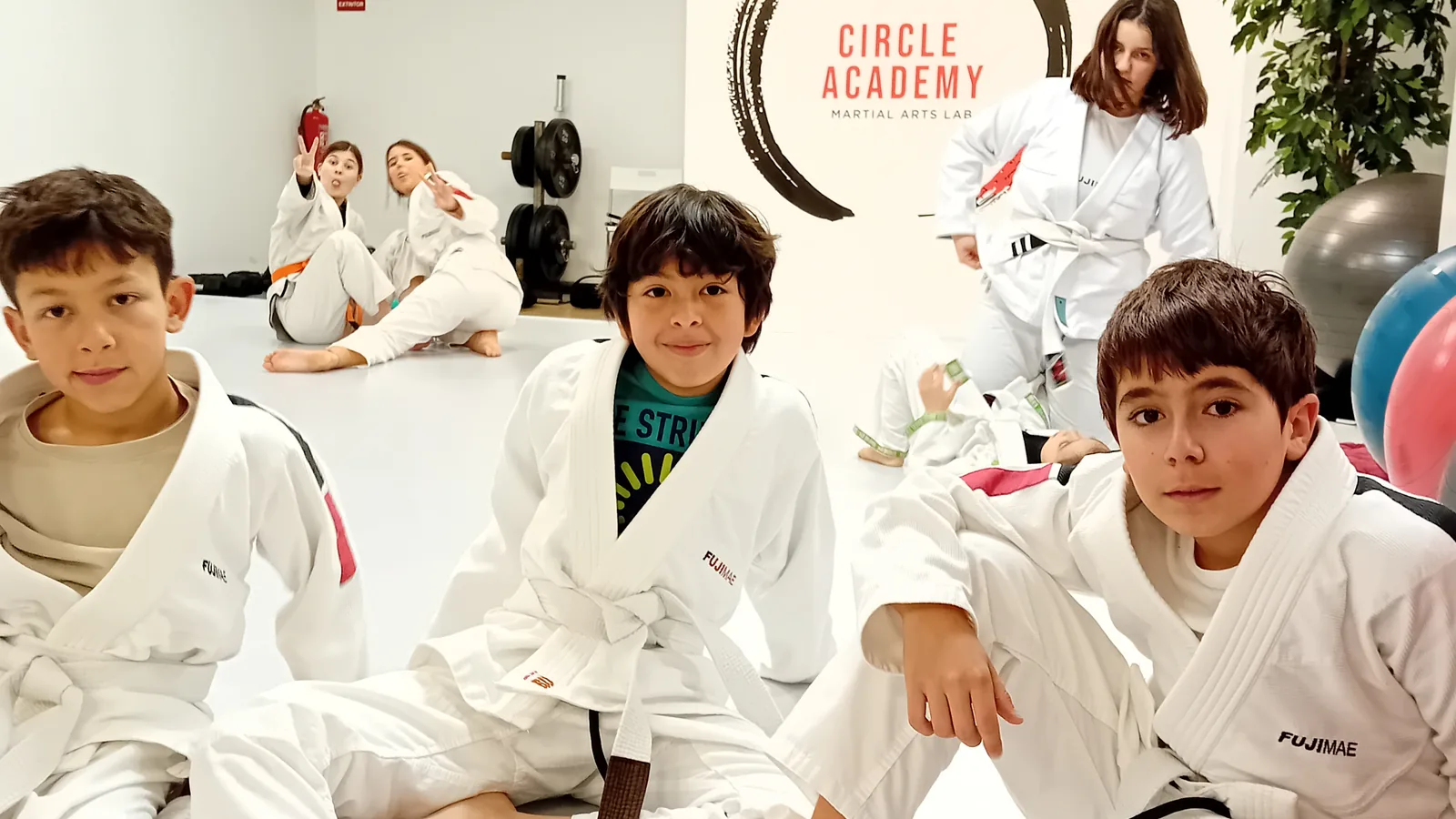
The first month is not a test or a deadline for showing results. It is a period for meeting the instructor, understanding the rules of the mat, discovering how the group works and seeing whether the activity fits both the child and the family's routine.
Every student adapts differently. Age, previous experience, attendance and the way a child responds to a new environment all shape the process. It is therefore helpful to observe their experience without comparing it with other children or expecting a specific transformation within four weeks.
Before the first class
A little practical preparation removes avoidable uncertainty and lets the child focus on discovering the activity.
- Confirm the group with the academy. The age ranges for Kids and Teens overlap, so the team can advise your family on the most suitable group before you book.
- Bring comfortable sportswear. A T-shirt and trousers without zips, open pockets or hard pieces are enough for the trial. The team can explain which gi is needed afterwards.
- Take care of the basics. Short nails, clean clothing and a bottle of water are part of preparing to train with other people.
- Explain what kind of activity it is. These classes have no punches or kicks, but they do involve physical contact, grips and groundwork. There are also rules for stopping, releasing and looking after a training partner.
- Arrive a few minutes early. This gives the student time to meet the instructor and see the space before the session begins.
What happens in a first class
Circle Academy's kids sessions last 60 minutes and follow a recognisable structure: activation and mobility, an explanation of one skill, progressive drills and a controlled situation or technical game adapted to the group.
On a first visit, much of the effort is simply about finding one's bearings: knowing where to stand, listening to an unfamiliar instruction, working with a partner and recognising when a drill starts and stops. It is normal if a technique does not work yet; the class is designed for learning through repetition, not mastering it on day one.
Some students join in immediately, while others need to watch before becoming involved. That first response provides useful information, but it does not determine on its own whether the activity will be a good fit. Afterwards, it can help to ask the instructor what they observed and what they recommend for the next session.
A realistic progression across four weeks
There is no identical sequence for every child, but the first month usually offers a chance to move from novelty towards some familiarity with the routine. A cautious way to understand that process is:
- First sessions: recognising the space, the names of a few positions and the basic safety rules.
- Following classes: encountering familiar movements again, needing fewer prompts to get organised and understanding each drill's purpose more clearly.
- At the end of the month: being able to assess with more context how the student experiences the class, contact, group and pace of learning.
These are possibilities, not required milestones. Missing a session, changing partners or meeting a new technique can make one class feel easier or harder than the previous one. Progress in Jiu-Jitsu is not linear.
What to observe
Instead of measuring the month by the number of techniques remembered, a family can look at specific signs related to the class experience:
- Whether the child steps onto the mat with a reasonable willingness, even if they still have doubts.
- Whether they are gradually understanding instructions and the rules for stopping and releasing.
- Whether they can work with different partners and respect turns.
- Whether they can explain what they enjoy, what they find difficult or what makes them uncomfortable.
- Whether the chosen frequency is sustainable alongside school, rest and other activities.
None of these observations guarantees effects beyond the mat. They help assess adaptation to this specific activity and support a useful conversation with the instructor.
The family's role
Supporting a child does not mean directing the class from the side. During the first few weeks, it usually helps to keep the routine predictable, arrive with time to spare and let the instructor give the technical guidance.
After training, open questions such as “What did you practise today?” or “Was any part difficult?” provide more information than asking whether the child won or lost. It is also important to tell the team about anything relevant to taking part in the activity, rather than waiting for it to become a problem during the session.
Avoiding comparisons with siblings or classmates makes it easier to review the process based on the individual student's experience. Consistency is useful when the class is a good fit, but it should not be confused with forcing a situation that causes persistent distress.
How to review adaptation at the end of the month
After several classes, the family, student and instructor have more information than they did after a single trial. The review can focus on four questions:
- Does the student want to continue, and can they explain how they experience the classes?
- Are they gradually understanding the class structure and basic rules?
- Are the group and frequency suitable, or would it help to adjust either one?
- What has the instructor observed, and what do they suggest working on next?
The answer is not always simply to continue or stop. Sometimes it makes sense to try another group, begin with one class per week or allow more time for adaptation. Talking to the team allows the family to decide using evidence from the child's actual experience.
Circle Academy's kids programme
The current programme information below comes from the same data used by our schedule and prices pages:
Groups and times
- Tuesday: 18:00–19:00 · BJJ Kids 8–15
- Wednesday: 18:00–19:00 · Teens 11–15
- Thursday: 18:00–19:00 · BJJ Kids 8–15
Fees
- Kids BJJ · 1 class per week: €49/month
- Kids BJJ · 2 classes per week: €69/month
- Unlimited Kids BJJ: €79/month
Annual membership: €80/year. Required and charged separately. Insurance included. The kids trial is free.
Read about the Kids Jiu-Jitsu programme, check the complete schedule and review the conditions for every price plan before booking.
The first decision is simply to discover the class
A trial does not require a family to decide the whole journey. It is a chance to see the space, talk to the instructor and observe how the student feels in a real class. The first month can then provide the context needed to make a calmer decision.
The kids trial is free.
Contact us to confirm whether Kids or Teens is the best group and book the first class.