Central Fatigue in BJJ: Why Decision-Making Drops by Match Four

Before you start
This article provides science-based sports science insights, not individual medical or athletic prescriptions. It does not replace your coach, strength trainer, physician, or sports nutritionist. Nothing here should be introduced for the first time in competition: test everything thoroughly in training first.
Why Your Forearms Still Work, But You Can't Read the Sweep
By your third or fourth match in a tournament bracket, you make mistakes you would never commit in Tuesday practice. You walk straight into an obvious triangle choke, fail to recognize underhook cues, or hold onto an empty grip while giving away passing angle.
The standard explanation is "I was tired." But testing athletes shows something fascinating: maximum isometric grip strength and maximal output often remain remarkably preserved. What degraded was perceptual reading and tactical processing.
Peripheral Fatigue vs. Central Fatigue
Peripheral fatigue occurs within the muscle fibers themselves: depletion of phosphocreatine, localized acidosis, and calcium ion handling failure.
Central fatigue occurs proximal to the neuromuscular junction. The motor cortex and spinal cord reduce recruitment of motor units, and elevated anterior cingulate cortex activity raises the subjective perception of effort.
In high-speed combat sports, mental fatigue degrades performance not by weakening force output, but by impairing reaction speed, anticipation of opponent movement, and tactical decision accuracy.
The Energy Budget of Tournament Day
Cognitive energy is finite. Every choice made during tournament day draws from the exact same central reserve:
- Anxiously checking brackets on Smoothcomp every 4 minutes
- Arguing referee calls from the bleachers during your teammate's bout
- Engaging with social media notifications in the warmup area
- Repeatedly debating game plans with five different people
Eliminating extraneous cognitive expenditure between matches leaves critical neural processing bandwidth available for when you are locked in deep water.
References
- Russell S, et al. Mental Fatigue in Sport — From Impaired Performance to Increased Injury Risk. Int J Sports Physiol Perform. 2024;19(10):1158-1168.
- Pageaux B, Lepers R. The effects of mental fatigue on sport-related performance. Prog Brain Res. 2018;240:291-315. doi:10.1016/bs.pbr.2018.10.004
- Van Cutsem J, et al. The Effects of Mental Fatigue on Physical Performance: A Systematic Review. Sports Med. 2017;47(8):1569-1588. doi:10.1007/s40279-016-0672-0
- Li C, et al. Counteracting mental fatigue for athletes: a systematic review of the interventions. BMC Psychol. 2024. doi:10.1186/s40359-023-01476-w
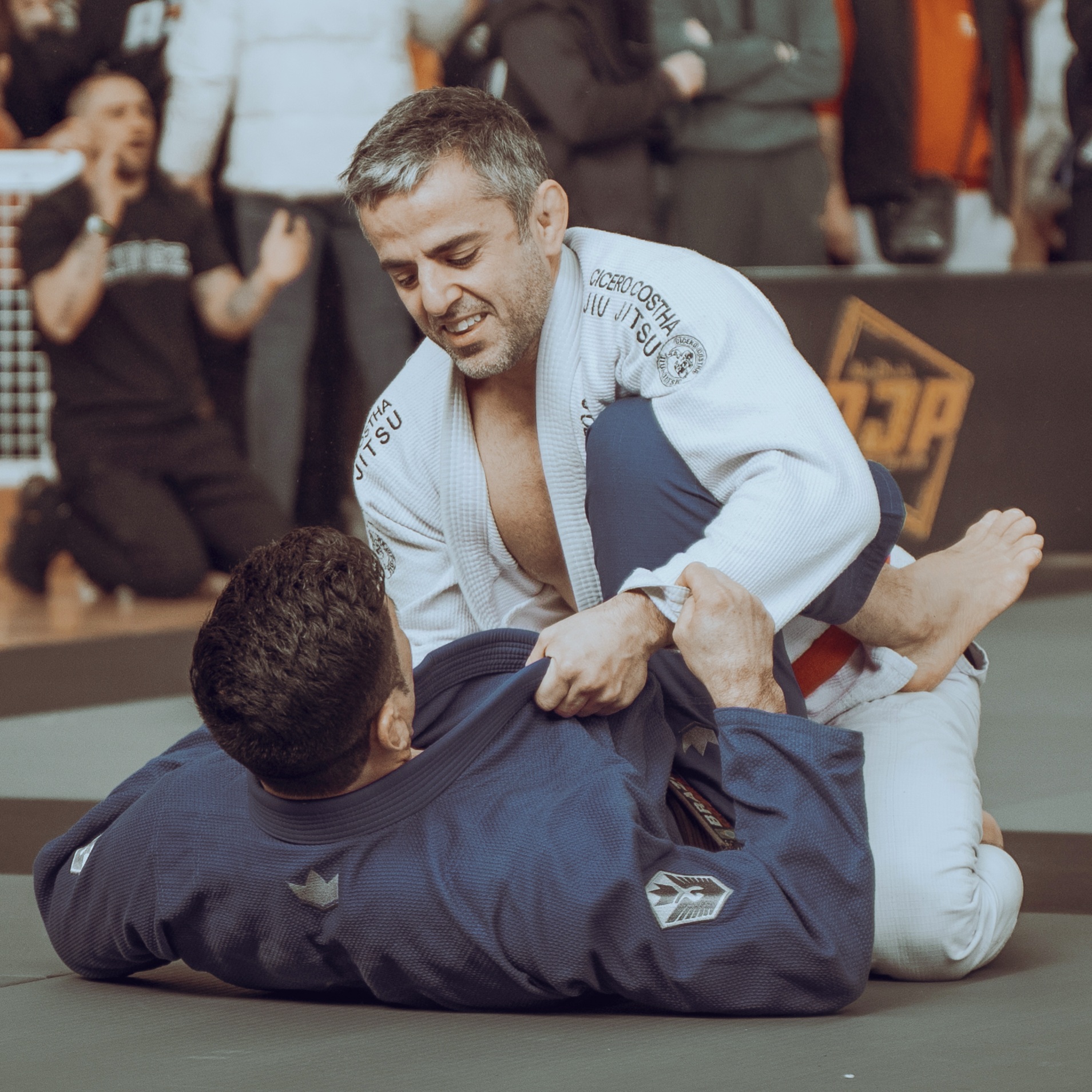
Javier Feliubadaló
4th-degree BJJ black belt under Cícero Costha and head coach at Circle Academy (Gràcia, Barcelona). IBJJF European Champion, IBJJF Pan and World No-Gi medalist, actively competing in Master 5 black belt featherweight.
Meet Javier →Informative Disclaimer
This content is for educational and informational purposes only. It does not constitute individual medical or nutritional advice. If your preparation involves weight management or cutting, consult a qualified sports nutrition professional. If you have or have experienced a complicated relationship with food or weight, consult a healthcare provider.