Tournament Week in BJJ: Taper, Priming, and Execution
Before you start
This article provides science-based sports science insights, not individual medical or athletic prescriptions. It does not replace your coach, strength trainer, physician, or sports nutritionist. Nothing here should be introduced for the first time in competition: test everything thoroughly in training first.
The Mistake That Costs the Most Medals
A competitor with six months of disciplined preparation reaches Monday of competition week. They know they shouldn't train to exhaustion, but they dread doing nothing. So they settle for a half-hearted middle ground: rolling at medium pace, lifting medium weights, doing a light jog on Thursday.
And on Saturday, they compete at 80% capacity.
It is the most expensive mistake because it feels like prudence. In reality, it delivers the worst of both worlds: enough residual fatigue to hinder peak power, yet insufficient stimulus to supercompensate.
Two Different Tools That Most Athletes Mix Up
Taper: Shedding Fatigue
Timescale of days to weeks. You systematically reduce total training volume by 40–60% while strictly preserving high movement intensity. Tapering is subtractive: physical fitness is already built; tapering allows it to emerge by stripping away accumulated fatigue.
Priming: Stimulating Readiness
Timescale of hours (typically 24 to 36 hours out). An acute, brief, non-fatiguing stimulus that heightens neural excitability and motor unit recruitment. Priming is additive: one small, precise neuromuscular spark.
The hierarchy: Priming only works on an athlete who is already recovered. If you arrive at Friday with chronic fatigue, a priming session does not potentate—it simply compounds fatigue.
The PAPE Phenomenon in Combat Sports
PAPE stands for Post-Activation Performance Enhancement: the acute elevation of force and velocity that manifests several minutes after an intense conditioning activity.
A 2026 meta-analysis published in the Journal of Functional Morphology and Kinesiology analyzed 13 PAPE studies in combat sports. The key finding was that PAPE response correlates directly with training status: advanced athletes manifest greater potentiation and clear fatigue faster, whereas novices frequently accumulate more fatigue than enhancement.
Competition Week Blueprint
| Day | Training Focus | Volume & Intensity |
|---|---|---|
| Monday | Last hard sparring session | High intensity, 50% normal round count |
| Tuesday | Technical drilling & positional reviews | Moderate intensity, crisp timing, no fatigue |
| Wednesday | Light mobility, grip drill flow | Low volume (30 min total) |
| Thursday | Complete active rest / walk | Zero mat work |
| Friday (Eve) | Priming Session (15–20 min) | 3-4 short explosive bursts (5-8s), full recovery |
| Saturday | Tournament Execution | Follow structured 60-minute activation protocol |
References
- Terbalyan A, et al. Effect of Post-Activation Performance Enhancement in Combat Sports: A Systematic Review and Meta-Analysis — Part II: Specific Performance Indicators. J Funct Morphol Kinesiol. 2026;11(2):157. doi:10.3390/jfmk11020157
- Bosquet L, et al. Effects of Tapering on Performance: A Meta-Analysis. Med Sci Sports Exerc. 2007;39(8):1358-1365. doi:10.1249/mss.0b013e31806015e6
- Mujika I, Padilla S. Scientific bases for precompetition tapering: a review. Int J Sports Med. 2003;24(4):232-243. doi:10.1055/s-2003-39503
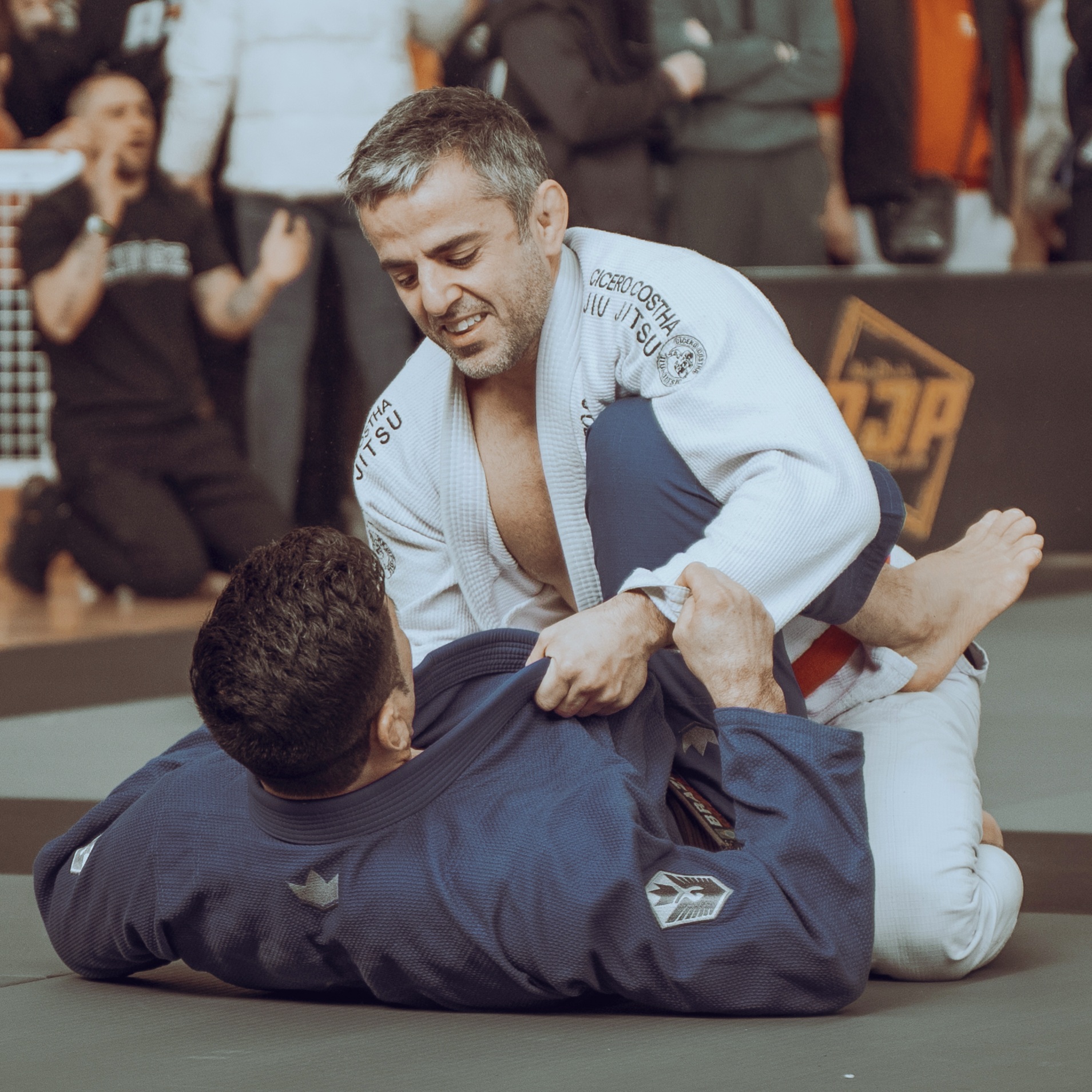
Javier Feliubadaló
4th-degree BJJ black belt under Cícero Costha and head coach at Circle Academy (Gràcia, Barcelona). IBJJF European Champion, IBJJF Pan and World No-Gi medalist, actively competing in Master 5 black belt featherweight.
Meet Javier →Informative Disclaimer
This content is for educational and informational purposes only. It does not constitute individual medical or nutritional advice. If your preparation involves weight management or cutting, consult a qualified sports nutrition professional. If you have or have experienced a complicated relationship with food or weight, consult a healthcare provider.